

5 Ways Buy Now Pay Later Apps Are Reshaping Retail
I’ve been tracking the BNPL space for a few years now, and what’s happening right now is genuinely wild. According to a 2025 Consumer Financial Protection Bureau report, over 50 million Americans used a buy now pay later service at least once in the past year.
TL;DR
- Over 50 million Americans used a BNPL service in 2025, per the Consumer Financial Protection Bureau.
- Klarna and Affirm charge merchants up to 5.99% per transaction, funding zero consumer rewards in return.
- Use BNPL only for large planned purchases where you’d otherwise pay 20%+ APR on a credit card.
That’s not a niche trend anymore — that’s a fundamental shift in how people think about spending.
Buy now pay later has quietly become the biggest challenger to traditional credit cards since the rewards card revolution of the early 2000s. And if you’re not paying attention, it could either save you money or quietly wreck your budget. Let me break down exactly what’s changing.
Is Buy Now Pay Later Actually Replacing Credit Cards?
The short answer is: not replacing, but absolutely competing. Klarna, Afterpay, Affirm, and Zip have collectively processed over $200 billion in transactions globally in 2025. That’s real volume that used to sit on Visa and Mastercard statements.
Here’s what’s different about BNPL vs. a credit card. With a traditional card, you get a revolving line of credit, a monthly statement, and (hopefully) rewards. With BNPL, you get a fixed installment plan — usually four payments over six weeks — often with zero interest if you pay on time.
Retailers love it too. Conversion rates go up when checkout friction goes down, and offering Affirm or Klarna at checkout has been shown to increase average order values by 30-40% according to Affirm’s own merchant data. That’s why you see it everywhere now, from Walmart to small Etsy shops.
How Are BNPL Apps Changing the Way People Actually Shop?
This is where it gets interesting — and a little concerning. BNPL doesn’t just change how people pay. It changes what they buy.
When a $200 pair of sneakers shows up as four payments of $50, your brain processes it completely differently. Psychologists call this “payment decoupling” — separating the pleasure of purchase from the pain of paying. I’ve caught myself adding things to cart that I would have never bought outright, simply because the installment breakdown made it feel trivial.
A LendingTree survey found that roughly 68% of BNPL users admitted to spending more than they otherwise would have. That’s not a small number. And it maps directly to the next trend — retailers are actively designing their checkout flows to push BNPL options front and center, not because it helps you, but because it helps their sales numbers.
The five ways this is reshaping retail spending are all connected to this psychological and behavioral shift. Let’s go through each one.
1. BNPL Is Driving Impulse Purchases at a Scale Never Seen Before
Impulse buying isn’t new. But BNPL supercharges it. When a $400 item becomes “only $100 today,” the impulse buy threshold moves dramatically.
Fast fashion brands like Shein and ASOS were early adopters of BNPL integration, and their average order values jumped significantly after adding Klarna. Now luxury retailers like Saks Fifth Avenue and even some car dealerships offer installment options at checkout.
The result is a retail environment where the perceived cost of any purchase has been artificially compressed by the installment framing. This benefits retailers enormously. For consumers, it’s a double-edged sword — you get flexibility, but you also end up with more stuff and more payment obligations stacking up simultaneously.
2. Traditional Credit Card Rewards Are Under Direct Pressure
This one matters if you’re a points or cashback person. Credit card issuers built their empires on interchange fees — the roughly 1.5-3% that merchants pay every time you swipe. BNPL companies often charge merchants more (Klarna charges up to 5.99% per transaction), but they pass none of that back to consumers as rewards.
So what’s the trade-off? You get zero interest on a short-term split payment, but you give up miles, cashback, and purchase protections. For big purchases where you’d carry a balance, BNPL can genuinely save you money versus paying 24% APR on a credit card. For everyday spending, a good cashback card still wins.
The pressure this creates on card issuers is real. American Express, Chase, and Capital One have all launched or expanded their own installment features (Amex Plan It, My Chase Plan, etc.) directly in response to BNPL growth. The major card networks are being forced to compete on BNPL’s turf, which means consumers are actually getting better options across the board.
3. BNPL Is Opening Credit Access to Millions Who Were Locked Out
Here’s something that doesn’t get talked about enough. Traditional credit cards require a credit score check. Many BNPL apps — particularly Afterpay and Zip — do only a soft pull or no credit check at all for smaller purchases.
For the estimated 45 million “credit invisible” Americans (those with no traditional credit history), BNPL has been a genuine entry point into structured financial products. A 2024 Federal Reserve study noted that BNPL adoption was highest among consumers aged 18-34 and those with household incomes under $50,000 — exactly the demographic that traditional banks have historically underserved.
That’s a positive story. But there’s a flip side. Without hard credit checks and reporting to bureaus, BNPL debt often doesn’t show up on credit reports — which means lenders can’t see the full picture of someone’s obligations. You could theoretically have five active BNPL plans and still get approved for a mortgage, because none of those payments are visible to underwriters.
4. Retailers Are Restructuring Their Entire Pricing Strategies Around BNPL
This one surprised me when I started digging into it. Some retailers are now pricing products with BNPL in mind from the start. Instead of listing a $299 item, they advertise “4 payments of $74.75” in their primary marketing — the full price is almost secondary.
This is particularly common in the furniture, electronics, and fitness equipment categories. Peloton famously rebuilt its entire sales model around monthly financing. Wayfair prominently features Affirm payment breakdowns on product pages before you even add anything to your cart.
The downstream effect is that price comparison becomes harder. When you’re comparing a $299 couch at one store versus “4 payments of $74.75” at another, your brain isn’t doing the same math. Retailers know this. And they’re using it strategically to reduce price sensitivity among shoppers.
5. BNPL Debt Is Creating a New Kind of Financial Stress
Let’s be honest about the dark side. The ease of BNPL is also its biggest risk. Because each plan feels small and manageable, it’s easy to stack them. Four plans running simultaneously — each perfectly reasonable on its own — can add up to $400-$600 in monthly obligations you didn’t consciously budget for.
A Bankrate survey found that roughly 16% of BNPL users had missed at least one payment in the past year. Late fees vary by provider — Afterpay charges up to $8 per missed payment, Klarna can pause your account, and Affirm may report to credit bureaus depending on the loan type.
The real danger of BNPL isn’t the interest rate — it’s the invisibility of the debt. Unlike a credit card statement that shows you everything in one place, your BNPL obligations are scattered across four different apps with four different payment schedules. Most people I’ve talked to have no idea what their total BNPL exposure is at any given moment.
If you’re using BNPL, I’d strongly recommend keeping a simple spreadsheet — just the app name, total owed, and next payment date. Sounds basic, but it forces clarity that the apps themselves are not designed to give you.
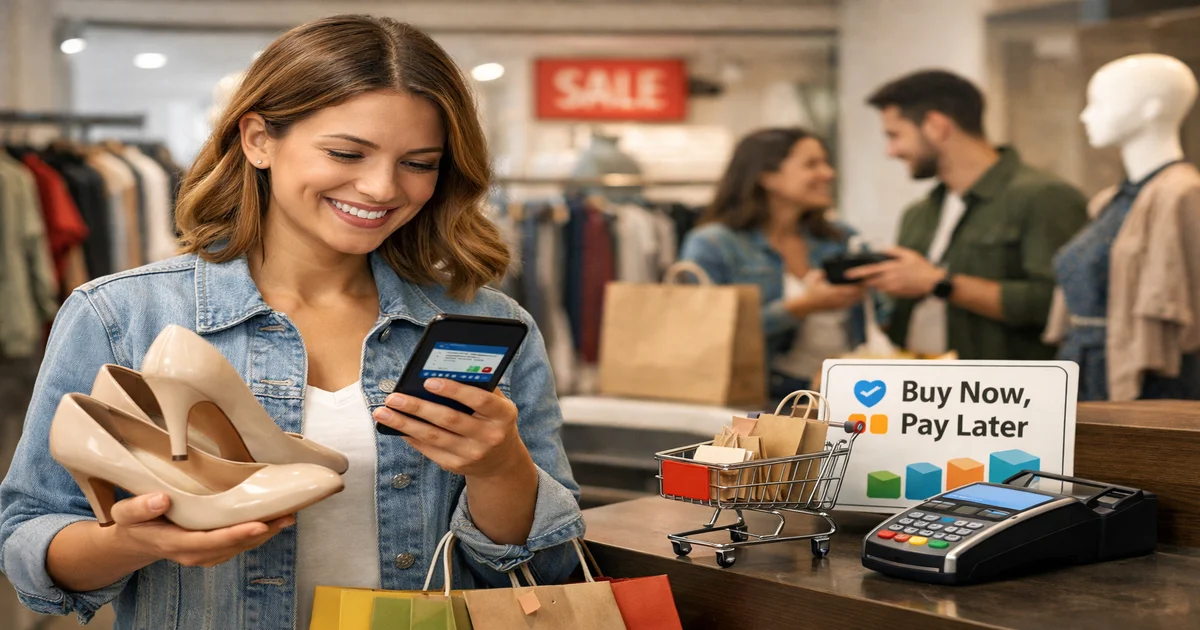
So Should You Use BNPL or Stick With Your Credit Card?
My honest take after years of watching this space: BNPL is a genuinely useful tool in specific situations. If you need to spread out a large, necessary purchase — a medical bill, a laptop for work, a car repair — and you’d otherwise carry it on a high-APR credit card, using a zero-interest BNPL plan is the smarter move. The math is simple.
But for everyday shopping, a good no-fee cashback card still beats BNPL. You get purchase protections, fraud coverage, credit building, and rewards. BNPL gives you none of those.
The retailers pushing BNPL hardest are doing so because it increases their sales, not because it’s better for your financial health. Keep that in mind every time you see “4 easy payments” at checkout. The payments might be easy — it’s the accumulation that catches people off guard.
Use BNPL intentionally, track what you owe, and never let the installment framing trick you into buying something you wouldn’t otherwise afford. That’s the only way to benefit from this shift without getting caught on the wrong side of it.
Frequently Asked Questions
-
Does using buy now pay later hurt your credit score?
It depends on the provider. Affirm reports to credit bureaus on some loans, while Afterpay and Klarna typically don’t for standard pay-in-4 plans. Missing payments can still trigger negative reporting. -
Is buy now pay later better than using a credit card?
For large purchases you’d carry a balance on, BNPL’s zero-interest option often wins. For everyday spending where you pay in full monthly, a cashback credit card is usually better due to rewards and purchase protections. -
What happens if you miss a BNPL payment?
Late fees apply immediately — typically $5-$10 per missed payment. Some providers like Klarna will freeze your account. Repeated missed payments may be sent to collections and affect your credit score. -
How many BNPL plans can you have at once?
There’s no universal limit. You can technically have multiple plans across different apps simultaneously, which is exactly why debt can pile up fast without careful tracking. -
Are BNPL apps safe to use for online shopping?
Established providers like Affirm, Klarna, and Afterpay use standard encryption and are regulated financial entities. The safety risk isn’t data security — it’s the behavioral tendency to overspend when payments are split into smaller amounts.